I think because Chapter 9 was called Burlington, Vermont I had more of an interest in reading it, I didn't even skim! I already knew that Burlington was one of the cleanest and healthiest cities in the United States, but it was interesting to read about what makes it just that.
What left me wondering was are there more cities in the United States that are like Burlington? She mentions Minneapolis and the fact that different mayors said they wanted to join in, but is there anywhere that has gone to the measures that Burlington has?
I also found it interesting that China has followed in our footsteps throughout the decades. Maybe if we went to China and said, "Hey, we are doing this right now...wanna join?" Maybe then we could skip those 30 years or so in between the technology advances.
Chapter 10 was kind of boring...once again. I think there were two chapters in which I enjoyed in this book, Chapters 7 and 9. I was expected more of a BANG! for the final chapter, but there wasn't...not for me anyway. A few more degrees and the earth will reach the highest temperature it has ever been since humans have evolved...well we have evolved with the rising temperature. There have always been changes on earth, this isn't the last of it.
To some I am sure this was a great book, but to me I didn't like it. I found it cheesy at times and bias. I found myself skimming a lot because some of the material was uninteresting. I was not a fan of her writing style, she used too many witty lines that got old after awhile. I only learned a little bit out of the 200 pages I read, which probably wasn't her goal. I thought it would be a lot more interesting but I didn't get must out of it.
Sunday, December 6, 2009

Sunday, November 29, 2009
Chapters 7 & 8
Well these two chapters where the best so far I guess. I don't understand why it took Kolbert so long to do so. Seems to me she needed to extend her essay into a book to make some money - paper is made of trees...a 10 pages article would have killed less trees Kolbert. Okay I am done hating for now.
This is great, the fact that she is telling us that our actions are harmful and what exactly we are doing that is harmful. I enjoyed the part in Chapter 7 where she is talking about everything that we do that causes carbon output - even a website to tell us how much! It was simple, interesting, and to the point. Why didn't she do this in the first chapter? I still like my long hot shower, but now I know that I have a larger carbon output!
Chapter 8 was good because it showed in my mind that it is more important to get governments to do something about this problem than the individual people. With the right information, the individuals can bring the right candidates to power.
I feel that even these chapters could have been cut down some, that seems to be her problem - back to my statement of money making. Did she write this book because she cares about the environment or the other green?
This is great, the fact that she is telling us that our actions are harmful and what exactly we are doing that is harmful. I enjoyed the part in Chapter 7 where she is talking about everything that we do that causes carbon output - even a website to tell us how much! It was simple, interesting, and to the point. Why didn't she do this in the first chapter? I still like my long hot shower, but now I know that I have a larger carbon output!
Chapter 8 was good because it showed in my mind that it is more important to get governments to do something about this problem than the individual people. With the right information, the individuals can bring the right candidates to power.
I feel that even these chapters could have been cut down some, that seems to be her problem - back to my statement of money making. Did she write this book because she cares about the environment or the other green?
Sunday, November 22, 2009
Chapter 5 & 6
Chapter 5 was totally different than what her style of writing has been through the rest of the book. It was even worse than the humor she tries to integrate into her writing. Then in chapter 6 she brings it back. I don't get the point she is trying to make with this. Stick with one style, don't just throw this other one in the middle of it.
I hate the way she tries to relate things, like in the beginning of chapter 5 where she is giving the reader a history lesson...what does this have to do with global warming? I wish she would just get to the point instead of beating around the bush.
I also thought she was trying to say that humans are to blame for global warming, then she goes into how it would happen regardless of what humans did...so what is the big deal? Yes it is happening faster but if it was going to happen eventually, why the worry?
I am still not sure what she is trying to do with this book. I haven't liked it from the beginning and I don't think anything she writes will change my mind other wise. Her style may work for some people but it just gets annoying, perhaps that is why she threw in chapter 5 to show she knows how to write about serious subjects, but it wasn't very successful in my eyes.
I hate the way she tries to relate things, like in the beginning of chapter 5 where she is giving the reader a history lesson...what does this have to do with global warming? I wish she would just get to the point instead of beating around the bush.
I also thought she was trying to say that humans are to blame for global warming, then she goes into how it would happen regardless of what humans did...so what is the big deal? Yes it is happening faster but if it was going to happen eventually, why the worry?
I am still not sure what she is trying to do with this book. I haven't liked it from the beginning and I don't think anything she writes will change my mind other wise. Her style may work for some people but it just gets annoying, perhaps that is why she threw in chapter 5 to show she knows how to write about serious subjects, but it wasn't very successful in my eyes.
Friday, November 13, 2009
Chapter 4
I think where Kolbert was trying to go with this chapter failed. She presented that these animals are dying or in trouble or migrating, but she has no proof that it is because of global warming. Yes these animals are dying off because of climate changes, but does that mean that it is global warming?
It was an interesting chapter, I didn't fall asleep this time, but as I was reading I was thinking 'What does this have to do with global warming?'. Why does it matter if this very limited species of frog dies? Not to be cold hearted, but they were in such a small area did they really contribute to the rest of the world? Butterflies are moving to places they have never lived before, good! Butterflies are pretty and fun to watch! Why not have them in more than one place?
I found the facts about the animals the most interesting, the frogs were pretty interesting because they only came out of the ground to breed and nobody knows much else about them.
Her humor gets old after awhile, it is like she tries to be witty, but it is just annoying. Maybe I am just hating on the author because I feel that the book is just telling us things we already have heard. People talking about global warming is nothing new.
It was an interesting chapter, I didn't fall asleep this time, but as I was reading I was thinking 'What does this have to do with global warming?'. Why does it matter if this very limited species of frog dies? Not to be cold hearted, but they were in such a small area did they really contribute to the rest of the world? Butterflies are moving to places they have never lived before, good! Butterflies are pretty and fun to watch! Why not have them in more than one place?
I found the facts about the animals the most interesting, the frogs were pretty interesting because they only came out of the ground to breed and nobody knows much else about them.
Her humor gets old after awhile, it is like she tries to be witty, but it is just annoying. Maybe I am just hating on the author because I feel that the book is just telling us things we already have heard. People talking about global warming is nothing new.
Sunday, November 8, 2009
Chapters 2 and 3
I think the biggest piece of evidence the author presents is the movement and melting of the glacier. She talks about how the glaciers melt each year but in recent years the one she is on has shrunk hundreds of feet. The Keeling Curve is also good evidence of the rising CO2 levels in our atmosphere.
It is good evidence but there really isn't anything to compare it to and why it is such a bad thing. I did like the prediction made by Arrhenius about how people in the future would be living under a warmer sky, but I feel that the way I read it...living under a warmer sky is a good thing.
Her writing puts me to sleep to be honest. I really have no interest in the topic of global warming. I feel like she has just taken a side and wants to make sure all her readers believe at the end of the book that global warming is here and it is all our fault. I am sure that some people would enjoy this book, but I find it boring. There is really nothing we can do to absolutely stop global warming and even if there was, I am sure there wouldn't be enough people on board in the world to stop it.
It is good evidence but there really isn't anything to compare it to and why it is such a bad thing. I did like the prediction made by Arrhenius about how people in the future would be living under a warmer sky, but I feel that the way I read it...living under a warmer sky is a good thing.
Her writing puts me to sleep to be honest. I really have no interest in the topic of global warming. I feel like she has just taken a side and wants to make sure all her readers believe at the end of the book that global warming is here and it is all our fault. I am sure that some people would enjoy this book, but I find it boring. There is really nothing we can do to absolutely stop global warming and even if there was, I am sure there wouldn't be enough people on board in the world to stop it.
Sunday, November 1, 2009
Field Notes
I don't have a huge interest in the concern of global warming, but the author of this book makes it easy to understand and holds your attention while reading. I appreciate anyone who can do this, because if I don't have an interest I usually stop reading.
I enjoy that she goes to Alaska to see the work of the scientists she is writing about. That is reporting, not only interviewing but getting your hands dirty that is how you get the real story.
I also like how she goes to these little towns in Alaska and shows the reader how this warming is changing their worlds as they know them. This brings a whole new perspective to people who can't see the effects right now (like me!).
I enjoy that she goes to Alaska to see the work of the scientists she is writing about. That is reporting, not only interviewing but getting your hands dirty that is how you get the real story.
I also like how she goes to these little towns in Alaska and shows the reader how this warming is changing their worlds as they know them. This brings a whole new perspective to people who can't see the effects right now (like me!).
Wednesday, October 21, 2009
Ladybugs
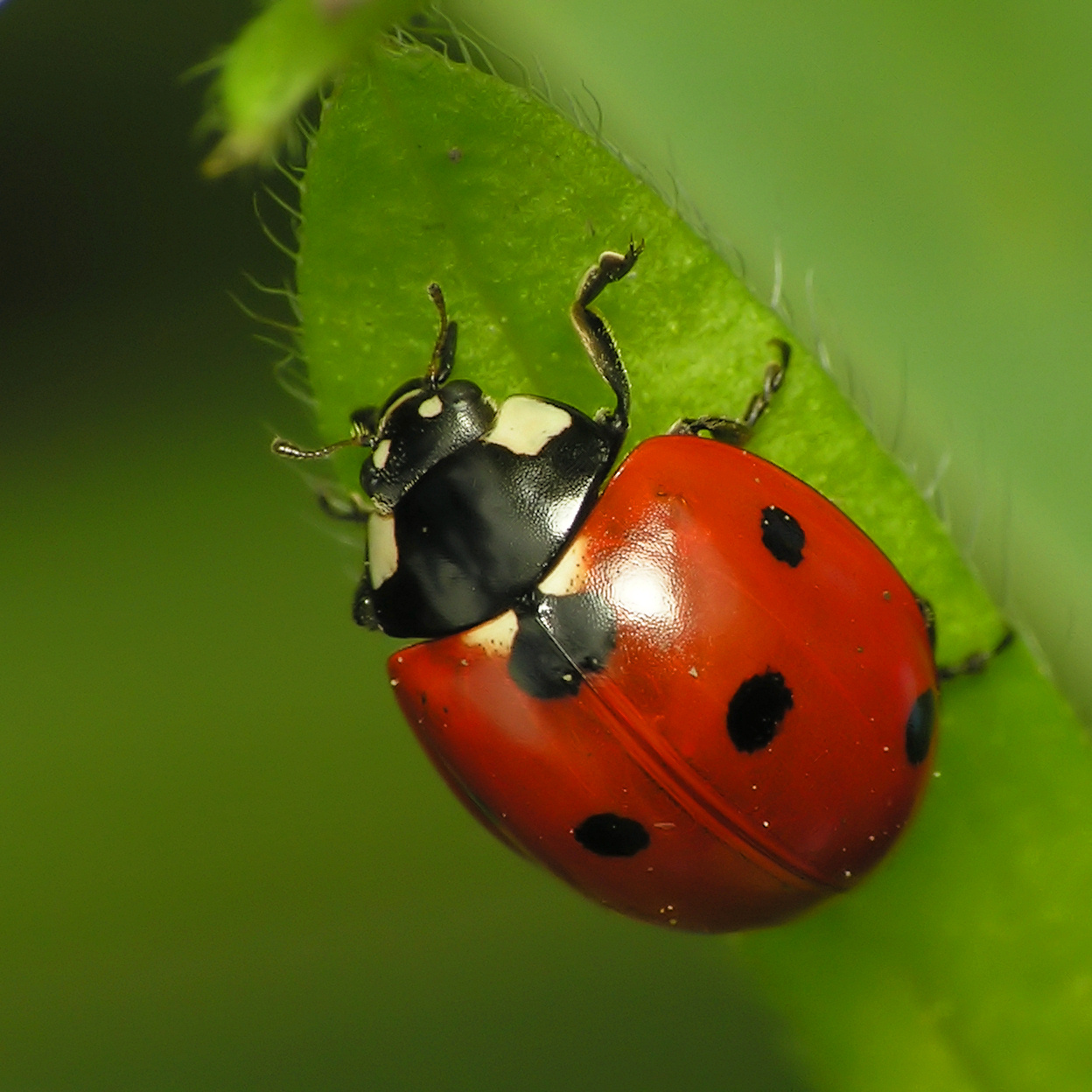
It is that time of year when the ladybugs make their grand debut before the cold weather sets in. It is my favorite time of the autumn season. They seem to only be around for a short time before it gets too cold for them to be flying about, but when they are...it is pretty neat...to me anyway.
Walking around on tiny short legs with little antennas, these tiny round red/orange/yellow beetles have black spots which vary in patterns. These colors and spots make predators unattracted to them. If they are threatened the ladybug can secrete a fluid from joints in their legs which gives them a foul taste and they can play dead!
The Coccinella septempunctata is the scientific name for the ladybug. It can live two to three years in the wild (who would have thought!) I didn't know an insect could live that long!
There are over 5,000 species of ladybugs. In Europe they are called ladybird beetles.
Some of these brightly colored creatures have a great appetite which farmers love because they eat plant eating insects which eat crops. Ladybugs lay hundreds of eggs in colonies of these plant eating insects and when the larvae hatch...they feed on them. These larvae can eat up to 5,000 insects in its larvae stage of life, which is 3-6 weeks. Not all ladybugs eat plant eating insects, some eat plants.
They are also considered good luck in some cultures!
Subscribe to:
Posts (Atom)
