Wednesday, October 21, 2009

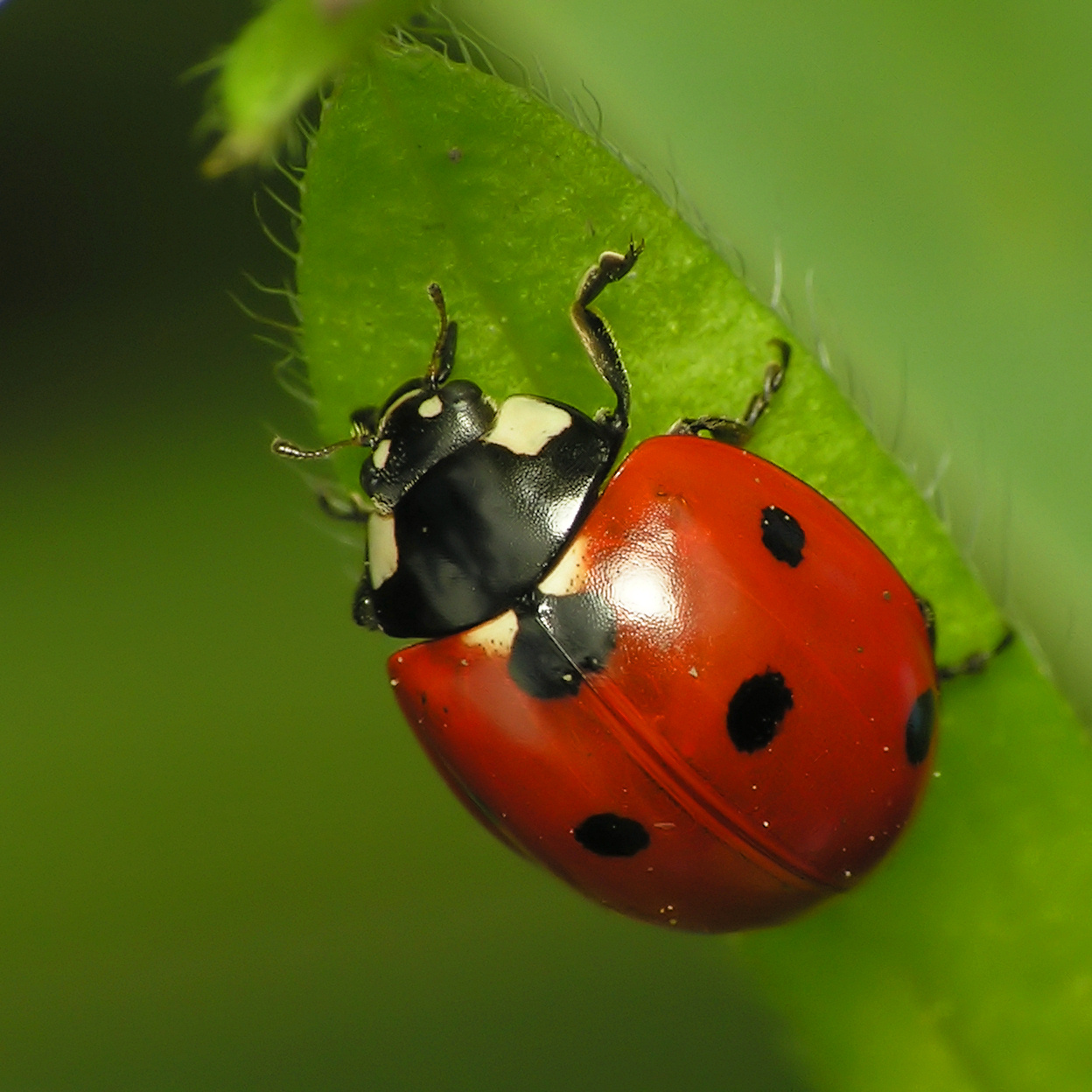
Ladybugs


It is that time of year when the ladybugs make their grand debut before the cold weather sets in. It is my favorite time of the autumn season. They seem to only be around for a short time before it gets too cold for them to be flying about, but when they are...it is pretty neat...to me anyway.

Walking around on tiny short legs with little antennas, these tiny round red/orange/yellow beetles have black spots which vary in patterns. These colors and spots make predators unattracted to them. If they are threatened the ladybug can secrete a fluid from joints in their legs which gives them a foul taste and they can play dead!

The Coccinella septempunctata is the scientific name for the ladybug. It can live two to three years in the wild (who would have thought!) I didn't know an insect could live that long!

There are over 5,000 species of ladybugs. In Europe they are called ladybird beetles.

Some of these brightly colored creatures have a great appetite which farmers love because they eat plant eating insects which eat crops. Ladybugs lay hundreds of eggs in colonies of these plant eating insects and when the larvae hatch...they feed on them. These larvae can eat up to 5,000 insects in its larvae stage of life, which is 3-6 weeks. Not all ladybugs eat plant eating insects, some eat plants.

They are also considered good luck in some cultures!

Thursday, October 8, 2009

What are Eye Boogers?

I have always wondered what exactly was going on in the corners of my eyes in the morning. I really hate when I clean them out and this string of goop comes with it. What is this and why does it happen?

Turns out the proper name for eye booger is Rheum. It is a thin mucus that is naturally discharged from the eyes when we sleep. You get "crusties" when it dries. This stuff is made up of mucus discharged from the cornea or conjunctiva from the eye, tears, skin cells, and dust. Rheum can also be seen in the nose and mouth after sleep.

This is produced all the time, but is washed away naturally with tears when you blink. This can't happen when you are sleeping because you are not blinking, so that is why you get crusty eye boogers when you wake up!
The process is not useless, it traps dirt, dust, eyelashes, etc...and coats them in this mucus so it won't scratch your eye...what a great thing to have!

Producing eye boogers is very natural, it happens even in healthy people and children. However, if one morning you wake up and there is a large amount of eye boogers or pus, you could have a serious eye infection.
Sorry to ruin the fun of anyone who thought the sandman came at night but...that is science for you!

Saturday, October 3, 2009

Stephen Hawking Article Grading

This article was an interesting piece on Stephen Hawking; however, after three or four pages, it all blended together and lost my interest. I understand it is about him making a comeback after a few years, but I would have been more interested in the fact that he has survived ALS for so long.

Have there been studies done about him and is he helping contribute to this cause to help others? I haven't found anything...but if he has lived for over 40 years with this disease and hasn't contributed to finding a cure, I have no respect for the man.

I honestly think we should worry about problems here on earth before we go make predictions of things that we can't even get to in space.

Grading:

1. Lede - It was interesting and got me reading it, I think if it had started with "On a mild March evening..." it would have been better. 18/20

2. Content - I think he answered all the right questions. Again, I would have been more interested in the ALS part of his life...but if it wasn't a big part of his life there is no need to talk about it. After the first three or four pages, I became uninterested. I am not big on the study of space, so once they started talking about it I zoned out. 16/20

3. Organization - I really liked the way it was organized with the subheads transitioning from one subject to another. It was very easy to follow. 19/20

4. Quality of Writing - I liked the writing style. It wasn't full of jargon and it was easy to read. Some things I didn't understand sometimes. The author was very good at the disciptions of things throughout the story whish made it interesting at times. 18/20

5. Clarity of Exposition - The author did well in descriptions but lost me because I didn't have any interest, this could pose a problem in some cases. I understand that Discover is a science magazine, but I probably wouldn't read this article by choice and it doesn't help that I really don't know what they are talking about most of the time. 15/20