Tuesday, September 29, 2009

Why does the knuckleball dance?

Imagine…you are up to the plate facing the famous Tim Wakefield from the Boston Red Sox. He winds up and throws. You watch the ball leave his hand, but as it comes near you…it doesn’t seem to be spinning…or following the path you expect. You swing... "STRIKE!" That pitch you just missed was called a knuckleball.

The knuckleball is one of the hardest pitches to hit, catch, and throw in the game of baseball. If you have ever played and faced a knuckleballer, you will know that the ball tends to dance and move as it is coming toward you. You probably will not know where it will be when it gets to you…earning yourself a strikeout or a walk.

This pitch is designed to minimize the spin of the ball when it is thrown. This lack of spin causes the ball to change paths and move in the air. If thrown correctly, it can dip, dive, and sometimes vibrate in flight, tricking the hitter. The dancing that the ball does refers to the stitching of the ball randomly changing orientation.

It also has a very slow spin, aiming to have about one and a half to two rotations from the pitcher's release to the catch. The spin is caused by the Magnus effect. This is where the air mass is deflected in one direction and the ball mass is deflected in the other direction. With the knuckleball, the center of mass of the ball is constantly changing direction, and with it the air mass must change too.

With this movement, the seams (stitches) slowly move and cause the air to separate from the ball. The orientations of the seams cause the air to push the ball causing it to go in different directions giving the illusion of dancing.

"Knuckleball" comes from the original grip of the ball; the knuckles gripped the ball instead of the fingers and then pushed with the release. This technique has been altered over time to the pitcher digging the fingernails of the middle and pointer fingers into the ball, with the thumb and pinkie as a support, but still pushing the ball with the release.

When thrown, every pitch can have control problems; however, the knuckleball is one that can be the most difficult to master. If a pitcher can learn how to throw it, it can be a very dangerous weapon in the pitching game. So watch out when you face one…you may win, but you also may lose…especially if you face a guy like Wakefield...don’t worry, he is been on the DL most of this season.

Friday, September 25, 2009

Hasn't Anyone Told You Mr. Bumblebee?


Apparently, nobody has ever told the darn bumblebee that it can't fly. According to scientists, bumblebees are 'aerodynamically incompatible with flight'. The main question is...why doesn't the bumblebee listen?

This conclusion was based on calculations using the aerodynamic theory of 1918-19. This theory basically said that bumblebee wings were too small to create sufficient lift to support it. There are many different "myths" about who discovered that the bumblebee shouldn't be able to fly.

A study done in early 2009 at Oxford University, found that the bumblebee's wings work independently from one another. This showed that it the airflow around the wings never joins up to support the insect, but yet...it still flies.

They say this is "the power of its own ignorance" that it doesn't know it can't fly. Really...who cares if they technically can't fly...isn't that what is great about nature? Somethings should be left unanswered.

Lede of the Week

The title is what caught my eye for this one: The New Weapon Against Climate Change: Condoms and I am sure I have gotten your attention now!

"Forget, for a moment, all those fancy geoengineering schemes that would alter the face of the planet in an attempt to reduce global warming’s impact. Population scientists argue that a cheaper and simpler strategy is to hand out birth control to those who want it–especially to people in the developing world, where birth rates are booming."

This is a lede that makes me want to finish the article, which I did and found an interesting theory. Why is birth control the answer to global warming? As the article goes on to explain...less people=smaller carbon footprints. So protect our planet by protecting yourself!

Sunday, September 20, 2009

Holy Burning Bush!

Days are getting shorter and the weather is getting cooler. There is at least one thing to look forward to, the brilliant colors of the trees around us in the Adirondacks. However, there is a plant that may take the show from the rest.

The Burning Bush gets its name from the fiery colors its leaves turn in the autumn which can be amusing to the human eye. The Burning Bush is also known as the Winged Euonymus because of the corky ridges that protrude from its branches. The scientific name is Euonymus alata; Euonymus meaning spindles and alata meaning winged in Latin. Some think it gets its name from the Bible, when Moses comes across a burning bush in the desert, but most likely it is because of the spectacular show it puts on in the autumn.

This plant produces a purple fruit that grows in clusters and split open when they are ripe revealing bright red insides that adds to the burning effect.

Some species of this plant can grow to over 15 feet high, with dwarf species growing slightly smaller.

It is originally from Asia, giving it an invasive status here. They were brought over to North America in the mid-1800s as oriental decorative plants.

The Burning Bush can be a problem for native species of plants, because they take over large thickets of natural forest. The original plant can produce many unwanted seedlings; because of those unwanted seedlings, there have been mass over takings in the eastern United States of these plants. Once their root system is in place, it can be very hard for other plants to grow.

Many people enjoy having these plants in their yards because of the brilliant colors they produce in the autumn. They are very easy to take care of, but they can overtake an open space if they are not monitored properly. They lose their leaves in the winter like many trees and shrubs in the Northeast, but they come back in the spring to get ready for their autumn show all over again.

Thursday, September 17, 2009

Lede of the Week

"Hawaii Tries Green Tools in Remaking Power Grids


NAALEHU, Hawaii — Two miles or so from this tiny town in the southernmost corner of the United States, across ranches where cattle herds graze beneath the distant Mauna Loa volcano, the giant turbines of a new wind farm cut through the air.

Sixty miles to the northeast, near a spot where golden-red lava streams meet the sea in clouds of steam, a small power plant extracts heat from the volcanic rock beneath it to generate electricity."

I found this lede very compelling to read. Without reading the title I am drawn into this story; I want to know what is happening and why. It is very descriptive and sets the perfect scene to make the reader want to read more. It is always nice when you can be sent somewhere in the beginning of a story, instead of being dropped right in without knowing what is going on.

Friday, September 11, 2009

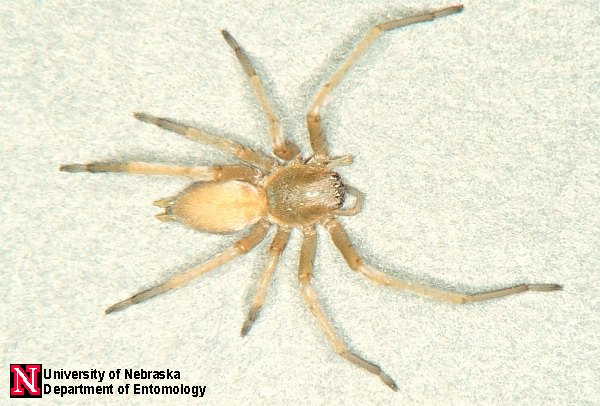
The Cheiracanthium Inclusum


While walking down the sidewalk one morning, I saw a small yellow spider crawling across the cement. I believe this spider is the Yellow Sac Spider or a Cheiracanthium Inclusum.

These spiders are usually found outside, but when the weather gets cold they tend to move inside. They also tend to be nocturnal, so it is interesting that I saw one during the day. (It was early in the morning, which may explain it.)

The yellow sac spiders are about a quarter-inch long, they can be beige or pale yellow, and they have two rows of four eyes. They do not have markings like that of a Black Widow or the like, but its front legs tend to be the longest legs. They have these long legs to help them find prey in the night.

The Yellow Sac Spider is one that can be found around the world, it tends to be shipped in agricultural products that make their way into households. These type of spiders do not make webs, instead they are free range hunters. Usually they will spend the day in their sac-like silk nest (which is where the name Sac Spider came from) in protected areas and hunt at night. These nests are usually found in high places.

Yellow Sac spiders are biters and they tend to bite in defense. The bite can be painful, but it usually is not life threatening, always seek treatment because the poisonious bite can cause side effects.

Tuesday, September 8, 2009

Save the Birds and the Rest of the World!

This article, Study Finds Risk to Some Birds Nesting Near Oil Fields in Alaska, it talks about the effects humans are having on the habitats in Alaska. Humans are destroying the earth piece by piece and the number of people trying to stop it is less than those who are doing it.

We seem to be in the middle of a mass extinction according to some scientists. If you think about all the animals that have disappeared since humans have been around. (The mammoth, dodo bird, passenger pigeon. Not to mention animals on the brink of dying out, many animals in Africa, the giant panda, the polar bear, bats, etc.)

Will it stop before it is too late? In my life time plenty of animals will go extinct because of loss of habitat, disease, and hunting. Most of the human race does not realize what we are doing. Lately, I have had a major disliking to what people have done to this earth and are continuing to do. However, I am just one person in a world of millions. Things are already falling apart, but life must go on...I guess.

Thursday, September 3, 2009

So I am not weird after all!

In this article called, In Tonsils, a Problem the Size of a Pea, it talks about this strange thing that the human body is doing and it is happening to a number of people in the world. Doctors are calling it tonsil stones or tonsilloliths. These are little whitish, yellow "stones" that form in the pockets of a person's tonsils made up of mucus, dead cells, and other debris that get collected in the pockets. Not everyone has them, but there is a growing number of people who are coming out and saying they do, I am assuming because of previous sickness.

I am one of those people, unfortunately. I suffered from mono about five years ago and every once in awhile when I brush my teeth, a little "stone" pops out of my tonsil and I spit it into the sink. It is a very weird feeling but, it happens so much now that it is a regular routine.
It is also a good warning sign if I am over working myself. When I overwork I tend to get sick. One of the first warning sign of my sickness is swelling of my glands and then I usually have an excess amount of tonsil stones. Right away I know that I need to relax and get a few extra hours of shut eye for a few days. It is one of the many interesting thing that the human body does.

The article states that there isn't a lot known about these little stones and most doctors tell their patients that the "stones" are just food that got stuck, but that is now known that is probably not true. Perhaps this will spark some interest for the ear, nose, and throat doctors of the world to up their game and figure out why these "stones" form and what they are really for?
If you want to see what a tonsil stone looks like, here is a photo, they kind of gross me out so I didn't want it on my page. :)